

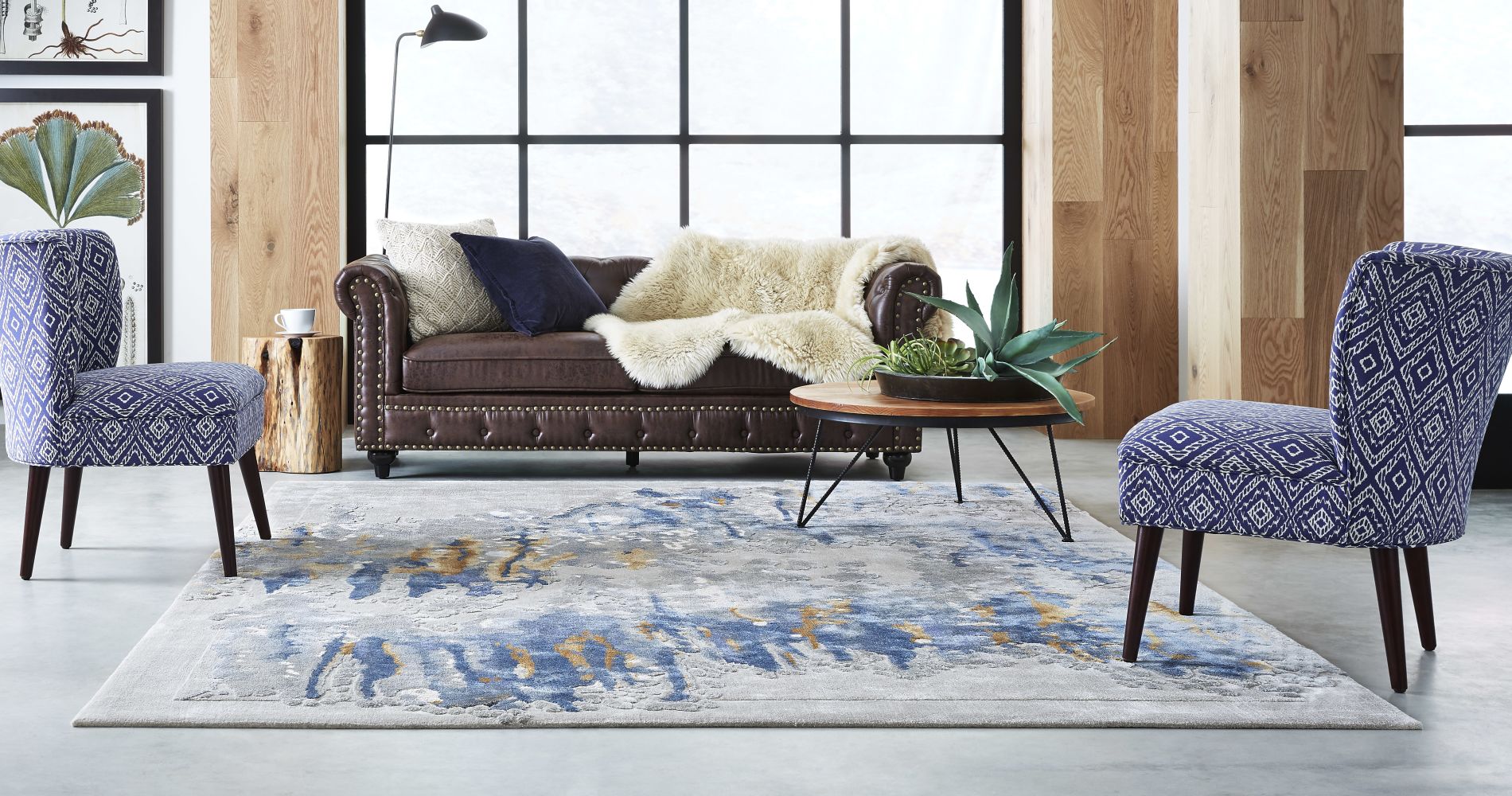
A properly proportioned area rug anchors your furniture, defines traffic lanes, and protects the flooring underneath from daily wear. The primary guideline for any residential space is simple: leave 12 to 18 inches of bare floor exposed between the rug edge and your walls. In smaller rooms across Jonesboro, reducing that border to 8 inches keeps the layout balanced without overcrowding the baseboards.
A common decorating misstep is buying a rug that is too small for the room. An undersized piece looks disconnected, making the entire living area feel fragmented. You can measure your seating arrangement first using painter tape on the subfloor or finished planks to verify visual sightlines before committing to a standard size.
Living Room Rug Dimensions and Layout Plans
Living rooms handle high daily foot traffic and serve as central gathering areas. The layout of your sofas, accent chairs, and coffee table dictates the right rug dimensions.
All Legs on the Rug
Large open-concept living rooms in modern suburban homes often need an 9x12 or 10x14 rug. In this configuration, all four legs of your sofa, accent chairs, and side tables sit completely on the surface. This layout creates a unified zone that defines the seating perimeter away from surrounding hallways.
Front Legs Only on the Rug
An 8x10 rug is the most versatile choice for standard single-family ranches in Paragould and Newport. Placing just the front two legs of your seating on the weave connects your furniture while letting the back legs rest on your hard surface flooring. Premium area rugs placed over durable planks add warmth against winter drafts while preserving easy walkways around the perimeter.
Dining Room Scale and Chair Movement
Dining room rug sizing depends on your table size rather than the perimeter of the room. The rug must extend at least 24 inches beyond every edge of the tabletop. This extra clearance ensures that when guests push chairs back to stand up, the back chair legs stay stable on the rug surface rather than catching on the edge binding.
A six-person rectangular dining table measuring 3x6 feet pairs best with an 8x10 rug. An eight- to ten-person dining setup needs a 9x12 rug. Round dining tables look best centered over a matching 8-foot or 10-foot round rug, or a generous square rug that mirrors the room architecture.
Bedroom Proportions Under the Bed Frame
Bedrooms need soft texture underfoot for cold winter mornings. Rug sizing here relates directly to your mattress size and bedside table arrangement.
Queen Bed Placement
An 8x10 rug placed perpendicular to a queen bed leaves roughly two to three feet of soft pile on both sides and at the foot of the bed. You can slide the rug up to stop right in front of your nightstands, giving you plush stepping room where your feet land every morning.
King Bed Placement
A king-size mattress demands a 9x12 rug to maintain balanced proportions across the room. A smaller 6x9 rug looks lost beneath a 76-inch-wide mattress frame. If your bedroom already features neutral carpet, layering a patterned flatweave or wool piece adds visual depth and protects high-wear paths between the bed and closet doors.
Custom Rug Sizing for Unique Layouts
Historic homes across Jonesboro and rural properties in Wynne or Blytheville frequently have non-standard room footprints, angled fireplaces, or extended foyers that do not suit off-the-shelf sizes. Selecting broadloom materials cut to your specific room perimeter solves odd dimensional challenges. Homeowners can select custom area rugs finished with tailored binding tapes to fit specific alcoves and open hearths.
Plan Your Room Layout With Local Flooring Experts
Finding the exact rug size for your home layout is simple with personalized local support. Schedule a free in-home consultation to have our team measure your space, assess natural lighting, and recommend proportions that match your daily family traffic. You can also visit our Jonesboro showroom to review woven textures, sample finishes, and plan residential installation projects with Laws Flooring & Rugs.
Frequently Asked Questions About Area Rug Sizes
What size rug works best in an open-concept living area?
An 8x10 or 9x12 rug works best because it establishes defined boundaries between your lounge zone, dining area, and kitchen without constructing permanent walls.
Should nightstands sit on the bedroom area rug?
Nightstands can sit on or off the rug. Most homeowners position an 8x10 or 9x12 rug so it starts just ahead of the nightstand legs, which keeps furniture level and prevents wobbling.
How much space should remain between a rug and the wall?
Leave 12 to 18 inches of exposed floor in medium to large rooms, and 8 to 10 inches in smaller rooms, to frame the space without hiding your flooring.


